Impact Assessment of Self-Help Groups towards Rural Development: A Case Study of Madhya Pradesh, India
Shashank Shrivastava · International Journal of Research and Analytical Reviews (IJRAR)
Abstract
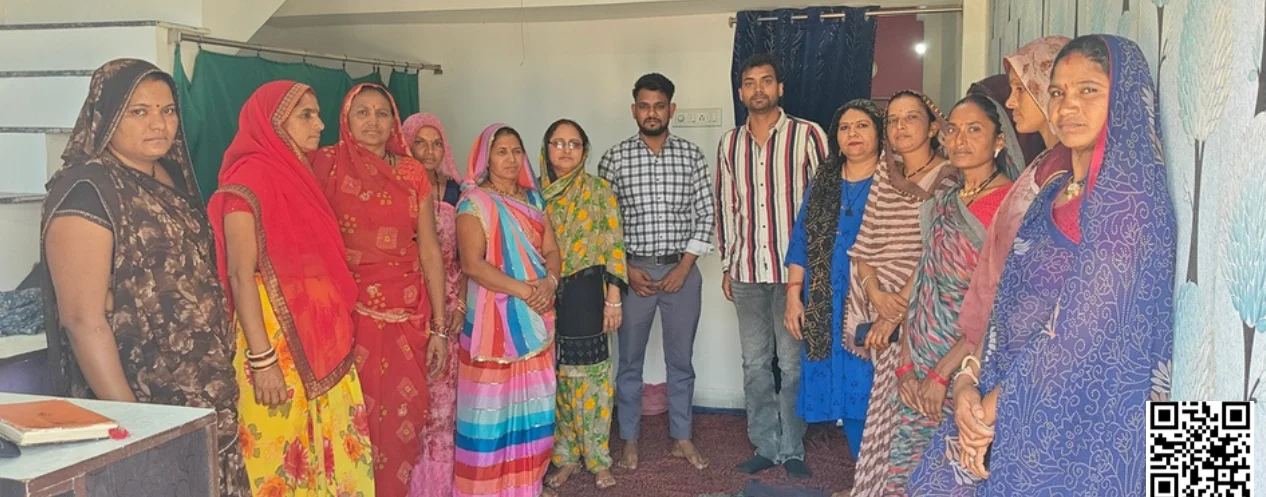
This article is based on primary and secondary information and examines the premise that Self Help Groups (SHGs) have significant positive impacts on rural development and women's empowerment in Madhya Pradesh, India. The context for this paper derives from the current emphasis on microfinance in rural finance discourse and its increasing importance as a development tool in the fight against poverty. The methodology of the present study relied on primary data collected from 1,500 SHG members through structured surveys and interviews in Nalchha, Tirla, and Umarban blocks of Dhar District, Madhya Pradesh, supplemented by review of relevant literature. The paper concludes that SHGs play a vital role in livelihood development, women's empowerment, and community transformation when supported with appropriate training and enterprise development interventions.
Summary
- Evaluates the impact of Self-Help Groups (SHGs) on rural development in Dhar District, Madhya Pradesh.
- Based on primary data collected from 1,500 SHG members through surveys and interviews.
- Assesses the role of SHGs in income generation, women's empowerment, and livelihood development.
- Uses statistical analysis including Chi-Square, Regression, and ANOVA to evaluate outcomes.
- Recommends a Hub-and-Scope Model for sustainable SHG-led rural development.
Key findings
- 71%+ of beneficiaries reported improved income after SHG participation.
- 80% of members actively participated in household decision-making.
- 100% training coverage was achieved in the selected study blocks.
- SHG interventions significantly increased income and reduced poverty.
- Government scheme convergence and enterprise development strengthened rural livelihoods.